

Space Tourism In 2025: Cost, Companies And The Future Of Space Hotels
For centuries, humans have dreamed of leaving Earth behind. Now, private companies are making that dream a reality. What was once reserved for astronauts is slowly becoming accessible to everyday travelers — at least, those who can afford it. Currently reserved for the wealthy, this ultra luxury will move into the realm of being more approachable as time progresses.
This guide explores everything you need to know about space tourism in 2025 and beyond: who’s offering flights, how much it costs, what the experience feels like, the safety concerns, and when space hotels might actually open.
What Is Space Tourism
Space tourism is commercial travel beyond Earth’s atmosphere for leisure, adventure, or research. It includes:
- Suborbital flights – A few minutes above the Kármán line, with microgravity and breathtaking Earth views. Here, you are 100 kilometers (54 nautical miles; 62 miles) above mean sea level.
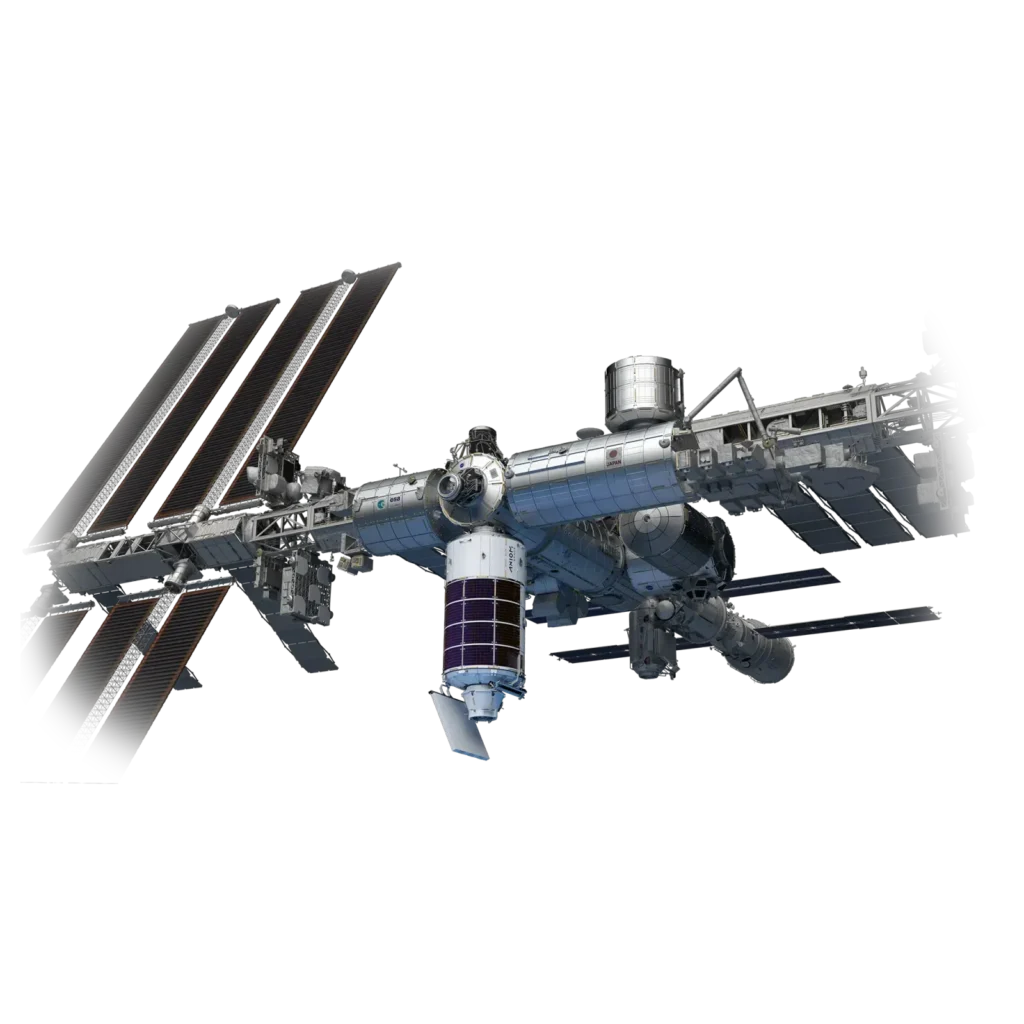
- Orbital missions – Multi-day stays in Earth orbit, including trips to the International Space Station (not to suggest that general space tourism would include a stay in the ISS as demand increases, but this general realm of orbit is inclusive of where you’d be).
- Lunar tourism – Planned flybys and potential future landings on the Moon. The Moon is absolute potential territory for space tourism. There is a lot of work that must be done prior, but it is certainly within the realm of possibility.
- Space hotels – Large orbiting habitats designed for leisure stays, possibly projected to be reality as early as the early 2030s.
Quick history:
- 2001: Dennis Tito became the first “space tourist,” paying ~$20M for an ISS stay. He spent 8 days in orbit
- 2020s: Suborbital commercial flights began with Virgin Galactic and Blue Origin. The purpose of the first suborbital commercial flight was for microgravity research.
- Today: Companies like SpaceX and Axiom Space are preparing orbital stays and space hotel concepts. Tangentially, SpaceX is working on what they refer to as “Earth to Earth” transportation, utilizing their Super Heavy rockets for transport between major terrestrial destinations. (i.e. Los Angeles to New York City in 25 minutes)
- There is still a lot of infrastructure and work to be done, but the industry is moving in the direction of making this into a reality.
“Today’s science fiction is tomorrow’s science fact.”
– Isaac Asimov
Key Players in Space Tourism (2025)
Emerging players like Stoke Space, now backed by over half a billion dollars in funding, are developing fully reusable rockets designed to make orbital access more routine and sustainable.
Here are the companies shaping the industry:
- Virgin Galactic – Suborbital flights on a spaceplane, ~US$600,000 per seat.
- The prices for Virgin Galactic have ranged from US$250,000 and up, with the expectation of their prices rising in 2026 as they undergo a rocket upgrade.
- The price covers a 90-minute spaceflight experience, including a few minutes of weightlessness. It also includes a three-day experience at Spaceport America in New Mexico, with medical tests, orientation flights on the mothership, and an interior simulation of the spacecraft.
- Blue Origin – Does not list a publicly available price for a seat, but they do require a US$150,000 deposit
- Blue Origin offered their first commercial flight in 2021 and saw a seat auctioned off for US$28 million.
- It’s believed that seat prices vary from individual to individual, taking into account factors such as passenger influence, social capital and how they align with the company’s mission.
- SpaceX / Axiom Space – Orbital missions to the ISS (~$70M per seat) and future commercial stations.
- SpaceX provides launch services for Axiom’s private astronaut missions to the International Space Station
- These missions include extensive astronaut training, and the fees include the use of ISS resources and life support, ground support and post-flight activities.
- Deep Blue Aerospace (China) – Targeting 2027 suborbital flights at ~$211,000.
- Passengers will experience a total flight time of approximately 12 minutes, including roughly 5 minutes of weightlessness.
- Passengers must be between 18 and 60 years of age and be in good physical condition.
- Above Space Development Corp. – Building Voyager Station, a rotating space hotel expected by 2027.
- The 2027 timeline is perhaps a bit optimistic… Regardless, the concept is exciting!
| COMPANY | TYPE | COST (USD) | DURATION | HIGHLIGHTS |
| Virgin Galactic | Suborbital | $450K – $600K | 90 minutes with a few minutes of weightlessness | 3-day training, spaceplane launch |
| Blue Origin | Suborbital | Auctioned $28M, estimated ~$250K | 11 minutes with a few minutes of weightlessness | Shepard capsule, high-profile riders |
| SpaceX/Axiom | Orbital | $55M – $70M | Multi-day orbital stay | ISS missions, private station plans |
| Deep Blue Aerospace | Suborbital | $211K | 12 minutes with 5 minutes of weightlessness | First Chinese tourist flights by 2027 |
| Above: Space Development | Space Hotel | Millions – estimate | Projected multiday stays | Voyager Station rotating hotel concept |
Space Tourism Cost: How Much Does It Really Cost?
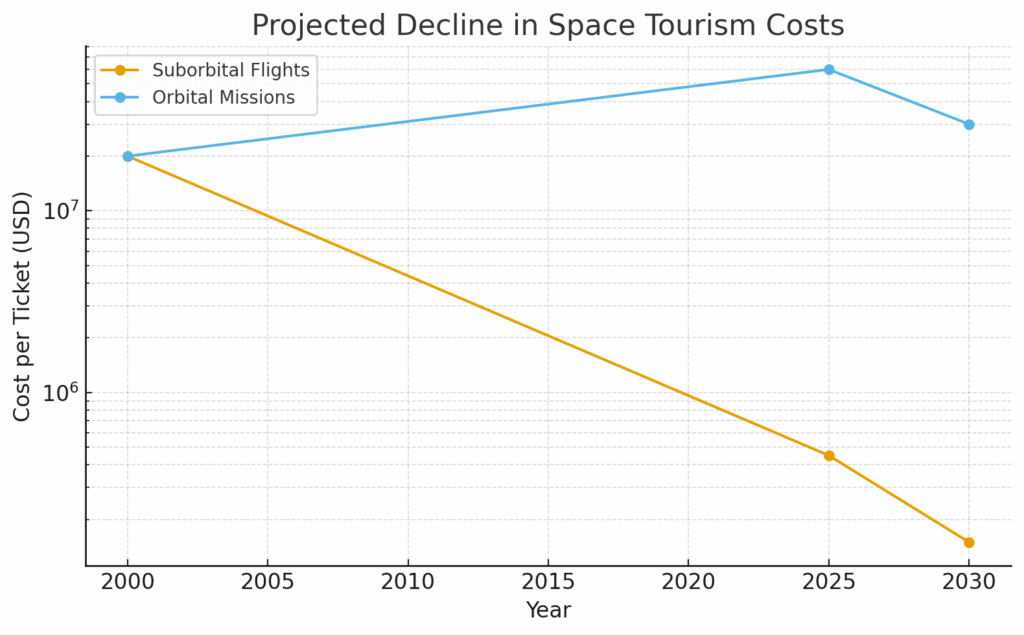
Space tourism is expensive — for now. As with many industries, the more this advances, the less expensive and more approachable it will become. Looking at what at this point is antiquated technology… the VCR! Late 1970s pricing put that unit between $1,000 and $1,400. Not long into the 1980s, prices had fallen to $200 to $400 due to market adoption, saturation and competition. Many industries have a tendency to follow a curve like this.
Future projections: Prices are expected to fall due to several factors: reusable rocket technology, increased competition among private companies, the expansion of the space economy, technological advancements in propulsion and life support, and the eventual realization of economies of scale
Suborbital flights: $200K–600K per person. Perhaps this is currently within the realm of those who are extremely well-to-do.
Orbital missions: $55M–70M per person (Axiom, SpaceX). This is, of course, reserved for the absurdly wealthy. If you had $70M to spend on an orbital stay, what else would you do in life?
Space hotels: Estimates suggest millions per stay once operational. This is pure speculation, and there are likely going to be a number of factors influencing pricing such as luxury and amenities, training and insurance, transportation and operational expenses. It’s hard to conceive an orbiting hotel not being as luxurious as possible, however…
What Is the Space Tourism Experience Like?
Pre-Flight Training – Medical checks, simulators, and G-force preparation.
- Pre-flight or spaceflight training is an integral and very necessary component of the space tourism experience. Ascending into orbit is unlike any other form of travel and can’t be compared to a normal flight experience available to every day travelers.
- Participants must have medical clearance for the extreme conditions bestowed upon the body including acceleration, microgravity and radiation. Thorough medical exams, blood labs and psychiatric screenings may be part of this process.
- Certain conditions such as those requiring specific medications such as blood thinners, daily insulin or some psychiatric conditions may disqualify some participants from flight.
Launch & Ascent – Intense G-forces, vibration, and the thrill of leaving Earth.
- The G-forces experienced with launch and re-entry may vary depending on the vehicle specifics, but may range in the neighborhood of 3 Gs to 8 Gs. (A typical, high intensity rollercoaster can get you upwards of 3 Gs)
- 3 Gs is that of a high intensity roller coaster
- 6 Gs can be safe for short periods but participants must still be in good health and may still cause significant discomfort
- 8-9 Gs is typically the upper echelon for well-trained fighter pilots and can be fatal for for ordinary people without proper training
In Space – Microgravity, Earth views, sunrises every 90 minutes (for orbital missions).
- Microgravity (essentially 0 Gs) is the one of the first dreams of being in space! Hey look, you’re floating! This is the standard while in orbit and presents its own unique set of challenges (eating, drinking, exercising, to name a few) but must be an incredible novelty to experience.
- Looking “down” at the Earth has been described as nothing short of life changing from several perspectives and if ever given the opportunity, is what I’d be most excited about.
- While on an orbital mission, you would experience a sunrise roughly every 90 minutes due to the speed at which you’re orbiting (roughly 17,400 miles per hour)
Space Hotel Amenities – Suites, restaurants, gyms, even bars in orbit.
- Hotels in space will likely share many of the same amenities as here on the surface, simply modified for orbit.
- Dining: There are some fantastically creative and artistic people who undoubtedly will be solving this section and innovating in incredible and creative ways! Perhaps a new category of James Beard awards will have to be developed for ‘Cuisine In Orbit’?
- As mentioned previously, exercise in microgravity presents its own challenges. What is the best way to keep muscles from atrophying while they’re experiencing the amount of disuse that happens when gravity is not weighing you down? This part of an orbiting hotel stay will likely be a necessary component of any sort of prolonged stay.
- Will there be a therapeutic angle? We already have sensory deprivation pods and I can only imagine adding a true weightlessness component to that. It’s well known that being in outer space is not good, physically, for the body, but perhaps the mental and emotional therapeutic angle is where it’s at…
- Early orbital visitors may find themselves in rooms designed for both science and serenity in the first generation of orbiting hotel suites. Find out what they may be like…
Return to Earth – Re-entry, high G-loads, and post-flight recovery.
- Re-entry back into Earth’s atmosphere hits at about 17,500 miles per hour. It generates incredible heat (temperatures up to 7,000°F) and loud vibrations. Passengers sometimes experience weakness, dizziness and fatigue as they adjust to Earth’s gravity once again.
- Post-flight symptoms typically go away relatively quickly and are somewhat dependent upon how long the participant was in orbit.
- Post-flight recovery will likely be a regimented part of the entire orbital experience and may involve muscle reconditioning, balance and coordination assistance and other activities to acclimate to Earth’s gravity.
Safety, Risks, and Regulations
Risks: Launch failures, microgravity health effects, radiation exposure.
- There is risk with anything one does, of course. Driving, flying, walking along the sidewalk… there’s simply inherent risk. The perception of that risk has a tendency to rise drastically when you’re sitting on top of rockets with millions of pounds of thrust. Not to sound redundant, but with many technologies, the more mature they become, the more safe and consistent they tend to be. Orbital launch failure, as recent as 2024, boasted an historical low failure rate of roughly 3%. Manned missions had a zero percent failure rate in 2024.
- Manned missions tend to have much more robust safety precautions built in as for some crazy reason, living, sentient cargo is considered more valuable than inanimate objects…
- Rocketry isn’t necessarily in its infancy, however, it is an industry that is advancing, and will continue to advance.
- We’ve touched on the effects of microgravity on health, and there are very real, legitimate concerns:
- Musculoskeletal System:
- Muscle atrophy: Without resistance from gravity, muscles (especially in legs, back, and core) weaken quickly.
- Bone demineralization (osteopenia/osteoporosis): Calcium leaches from bones, increasing fracture risk.
- Spinal elongation and back pain: Vertebrae expand slightly, causing astronauts to grow 2–3 inches taller in space, often with discomfort.
- Cardiovascular & Circulatory System
- Fluid redistribution: Body fluids shift toward the head and chest, causing facial puffiness, nasal congestion, and “chicken legs.”
- Orthostatic intolerance: Difficulty standing upright upon return to Earth; dizziness, fainting.
- Reduced cardiac output: The heart works less against gravity, leading to deconditioning.
- Possible heart rhythm disturbances in long-duration missions.
- Neurological & Vestibular (Balance)
- Space motion sickness: Nausea and disorientation in the first days of flight.
- Vestibular dysfunction: Inner ear loses its usual cues, affecting balance and coordination.
- Neuroplastic adaptation: Brain adjusts to new sensory inputs, but readaptation to gravity is difficult on return.
- Ocular & Intracranial
- SANS (Spaceflight-Associated Neuro-ocular Syndrome): Vision changes, optic nerve swelling, globe flattening—linked to fluid shifts and intracranial pressure.
- Headaches and impaired vision from altered cerebrospinal fluid dynamics.
- Immune System
- Immune dysregulation: Stress, radiation, and altered circadian rhythms can reduce immune function.
- Reactivation of latent viruses (e.g., herpes, chickenpox).
- Psychological & Behavioral
- Sleep disturbances: Altered light-dark cycles disrupt circadian rhythms.
- Stress and anxiety: Confinement, isolation, workload, and risk factors increase stress.
- Interpersonal conflict risk in small crews under pressure.
- Depression or reduced cognitive performance in long-duration missions.
- Other Physiological Concerns
- Radiation exposure: Cosmic rays and solar radiation increase cancer, cardiovascular, and CNS risks.
- Renal stones (kidney stones): Higher calcium excretion from bone loss raises risk.
- Reduced wound healing and immune response.
- Altered drug metabolism due to fluid shifts and organ function changes.
- Endocrine changes: Hormonal regulation (stress hormones, insulin) can shift in space.
- Microbial risks: Altered human microbiome and potential for bacterial virulence changes in microgravity.
- Musculoskeletal System:
Regulation: U.S. FAA oversees licenses; international laws are still evolving.
- This will undoubtedly be an evolving area to keep an eye on, and something that will likely benefit from having certain global standards and practices in place.
Company strategies: Safety redundancies, passenger training, emergency return systems.
- We’ve touched on a number of differences from company to company, but many of the big players in the orbital hospitality field will likely see similar best practices for safety and training in place by the time this reality comes to fruition.
Space Hotels: The Next Luxury Destination
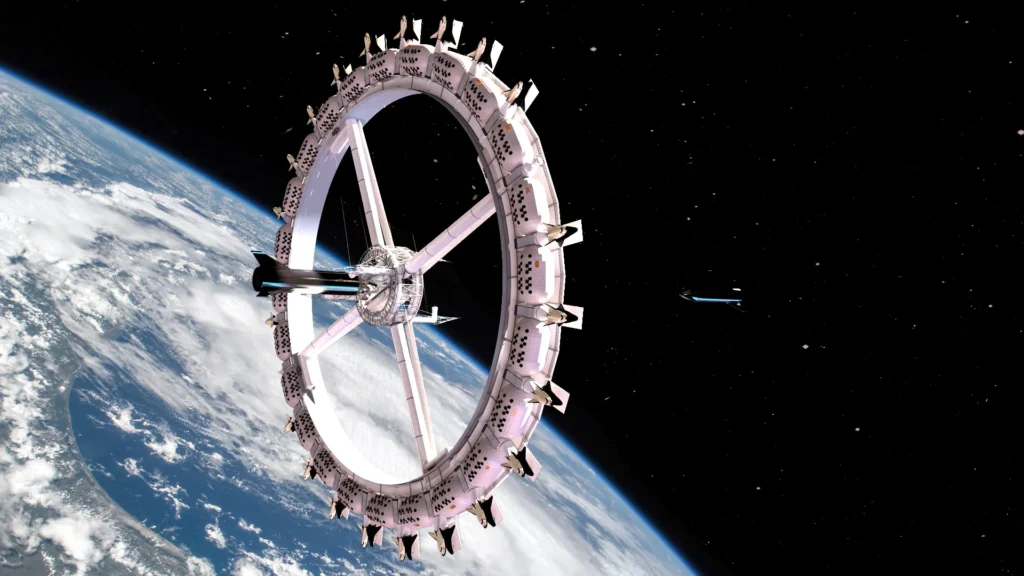
Voyager Station – A rotating luxury space hotel with capacity for ~400 guests, opening ~2027
- As mentioned, the 2027 opening is more than ambitions and optimistic. The below rendering, courtesy of Above: Space Development, shows what this may look like.
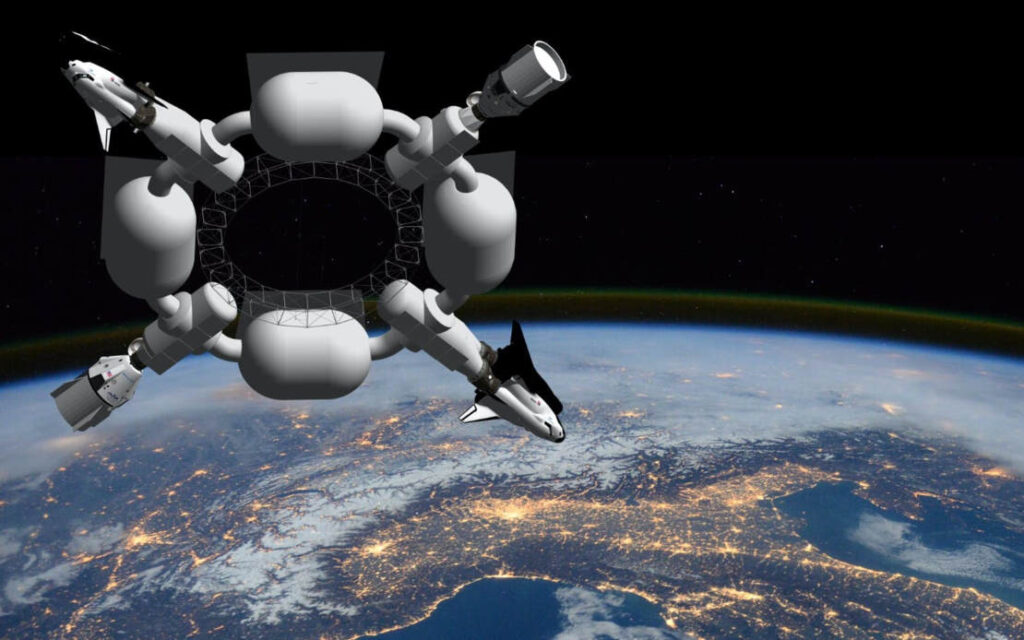
Pioneer Station – Smaller 28-guest station expected earlier.
- Below is a rendering of the Pioneer Station.
Hilton x Starlab – Hilton is co-designing interiors for Starlab, targeting 2028.
- With Hilton officially entering the game, the hospitality aspect is finally in the process of meeting up with the technology. Below, is a rendering of what Starlab’s project with Hilton may look like.
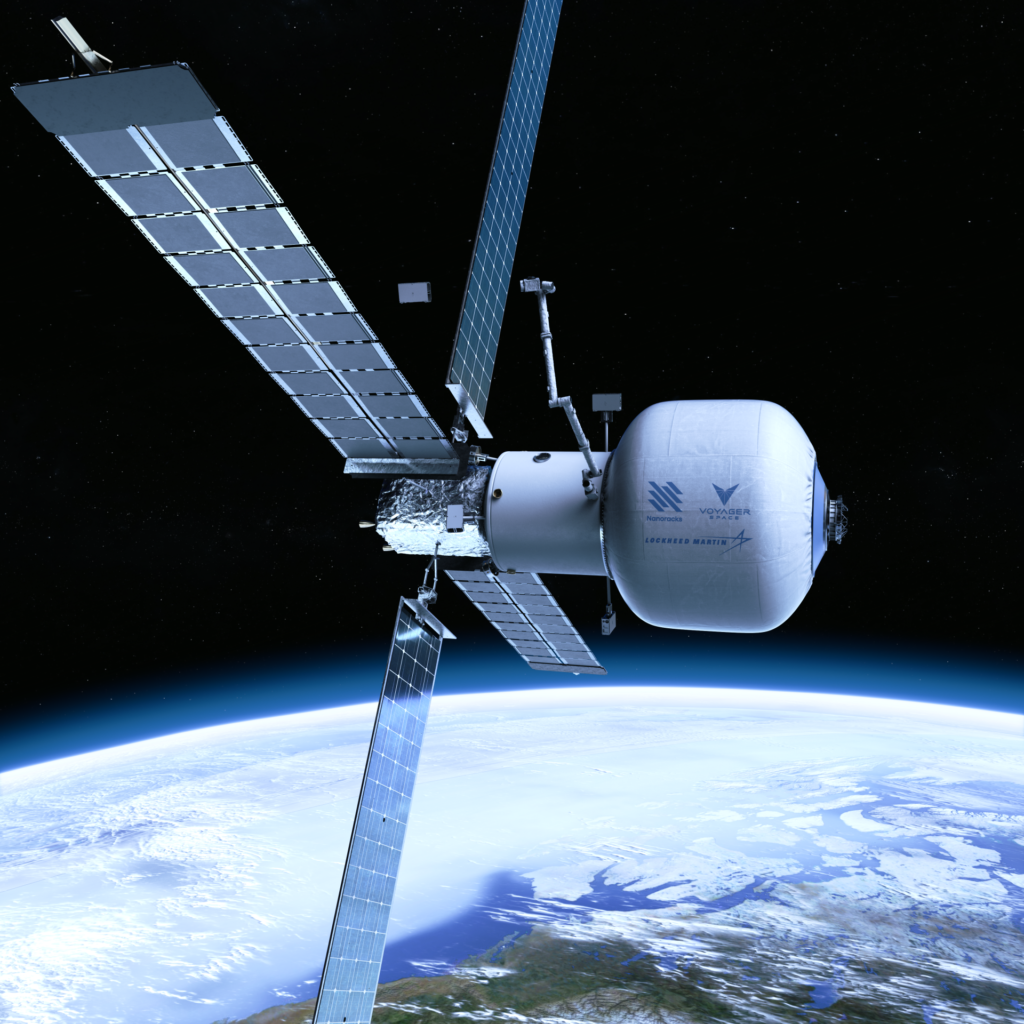
Axiom Station – First commercial station modules launching in 2027.
- And finally, below is a rendering of what Axiom Station may look like. This is currently under construction.
The Future of Space Tourism
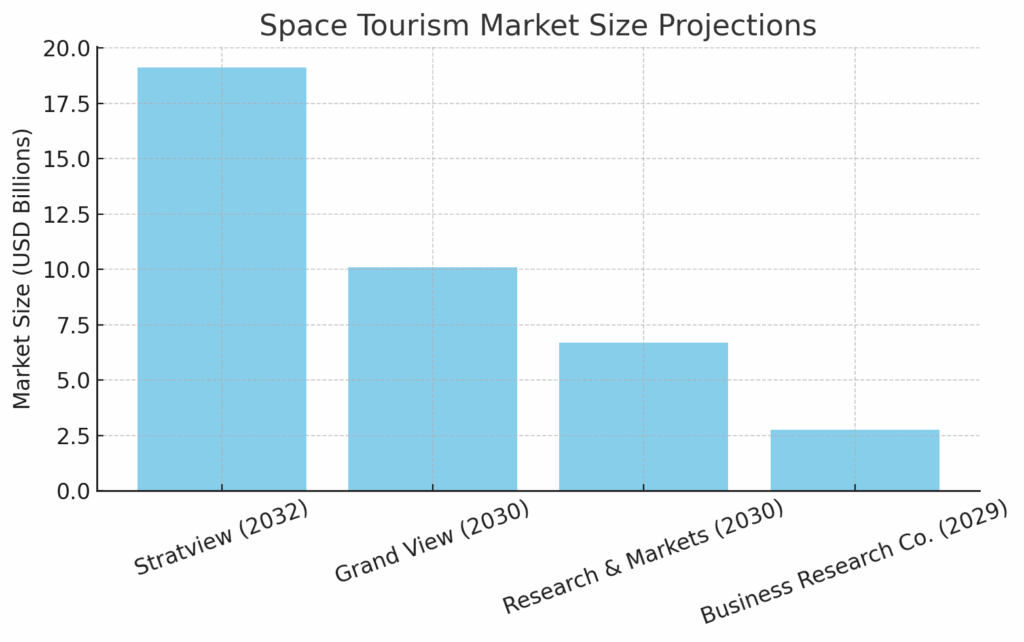
Market growth: $1.26B in 2025, projected $20B+ by 2033.
- Market growth is currently being rapidly driven by technical advancements, rising investments from a myriad of sources and piqued interest from high, and ultra-high net worth individuals.
- Stratview Research: Projects the market will reach $19.12 billion by 2032, growing at a CAGR of 43.6% from 2025 to 2032. The market size was approximately $1.05 billion in 2024.
- Grand View Research: Estimates a market size of $10.09 billion by 2030, with a CAGR of 44.8% from 2024 to 2030. It valued the market at $1.094 billion in 2024.
- Research and Markets: Predicts the market will hit $6.7 billion by 2030, with a CAGR of 31.6% from 2024. It valued the market at $1.3 billion in 2024.
- The Business Research Company: Forecasts the market will reach $2.75 billion by 2029, growing at a CAGR of 28.0%.
Key Growth Drivers: Tech, Demand and Interest, Investments and Publicity.
- Technological Breakthroughs: Innovations such as reusable rockets and advanced spacecraft designs from companies like SpaceX and Blue Origin have substantially lowered the cost of space travel.
- Growing Demand For Adventure Tourism: High-net-worth individuals and adventurous travelers are seeking unique, once-in-a-lifetime experiences. Space travel offers unparalleled views of Earth and a zero-gravity environment that epitomizes this trend.
- Increased Private Investment: Billionaires and private companies are pouring substantial capital into the space tourism sector, spurring innovation and accelerating development.
- Supportive Government Policies: Regulatory agencies, such as the Federal Aviation Administration (FAA) in the U.S., are establishing frameworks to support the industry’s development. Governments are also increasingly partnering with private space companies.
- Media and Publicity: Successful missions by companies and prominent individuals have generated significant public interest, further encouraging investment and future demand.
Price drops: Suborbital flights could fall below $200K in the next decade.
- Suborbital spaceflight costs are expected to decrease significantly by 2030, with prices potentially dropping from the current ~$450,000 to $100,000-$250,000 per person, though this depends on factors like reusable rockets, competition, and increased flight frequency.
- Current prices vary by provider, with Virgin Galactic selling tickets around $450,000, while Space Perspective offers $125,000 for balloon-based stratospheric flights. The long-term goal for suborbital and ultra-fast passenger travel is to reach prices comparable to first or business class airfare.
Ethical debates: Climate impact, exclusivity, and access.
- Suborbital flights significantly impact the climate because their rocket emissions, especially black carbon (soot) and water vapor, are injected directly into the stratosphere, a high-altitude layer of the atmosphere where particles persist for years due to the lack of rain and slow atmospheric circulation. This prolonged presence leads to disproportionately greater global warming and potential ozone depletion compared to emissions from aircraft, which are mostly washed out in the lower atmosphere. While current launch numbers are low, projections for future suborbital flight growth raise concerns about escalating CO2 emissions and unique stratospheric pollution, which could significantly impact Earth’s atmosphere.
How to Plan Your Space Vacation
Choose your type of trip (suborbital vs. orbital vs. hotel).
Research providers (Virgin Galactic, Blue Origin, Axiom).
Budget realistically (hundreds of thousands to millions).
Prepare your body (fitness, training).
Stay informed – Subscribe to Orbiting Hotels for breaking news.
Conclusion: A New Era of Travel
Space tourism is no longer a distant dream — it’s here, unfolding before our eyes. Right now, the price tags keep it reserved for the ultra-wealthy, but history shows that today’s luxuries often become tomorrow’s norms. Just as air travel, once only for the elite, eventually became accessible to millions, so too will spaceflight.
The next decade will be one of experimentation, breakthroughs, and firsts. Suborbital hops, orbital stays, and eventually fully operational space hotels will shape the way we think about leisure, adventure, and even business. Each launch, each new module in orbit, brings us closer to a reality where space is not just a frontier for astronauts and scientists, but a destination for travelers.
At the same time, challenges remain: ensuring safety, minimizing environmental impact, and navigating the ethical questions of exclusivity and access. These conversations will define not just the industry, but our values as a species exploring beyond Earth.
Whether you dream of floating in zero gravity, watching Earth rise over the Moon, or booking a suite in an orbital hotel, one thing is certain: space tourism marks the dawn of a new era in human experience. And like all great revolutions in travel, it starts with curiosity, boldness, and a willingness to look up.
Want to stay ahead of the curve? Orbiting Hotels will continue tracking the companies, breakthroughs, and opportunities shaping this industry. Subscribe now to follow along as the future of travel quite literally takes off.