

A Giant Leap for Reusability
In a landmark announcement this week, Stoke Space revealed it has raised $510 million in Series D funding, marking one of the largest private investments ever for a U.S. space launch startup. The round was led by Thomas Tull’s U.S. Innovative Technology Fund (USIT), joined by Washington Harbour Partners, General Innovation Capital Partners, and several returning investors — including Breakthrough Energy Ventures, 776, Toyota Ventures, and Woven Capital.
In addition to the equity investment, Silicon Valley Bank arranged a $100 million debt facility, giving Stoke substantial financial runway to accelerate development of its Nova launch vehicle, a rocket designed for complete two-stage reusability. With this round, the company’s total capital raised now approaches $1 billion.
What Stoke Plans to Do With the Capital
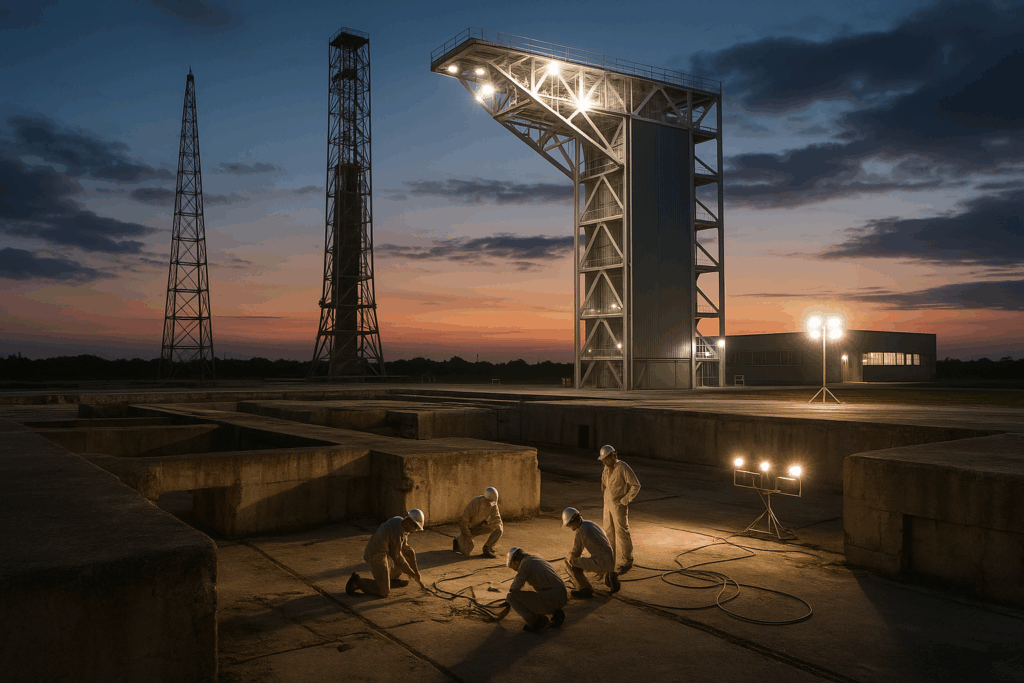
The new funds are earmarked to scale manufacturing, expand infrastructure, and complete the first flight of Nova, which is targeted for 2026 from Launch Complex 14 at Cape Canaveral — the same historic pad once used for Mercury missions in the 1960s.
According to the company, the capital will fund:
- Manufacturing expansion to support higher launch cadence.
- Completion of structural qualification testing for both stages.
- Operational readiness at LC-14, including ground systems and refurbishment capabilities.
- Development of “Boltline,” an internal program management and supply-chain optimization platform.
- Workforce growth across engineering, manufacturing, and flight operations.
Stoke CEO Andy Lapsa, a former Blue Origin propulsion engineer, described the milestone as “a turning point toward making spaceflight truly sustainable — not just in rhetoric, but in hardware.”
Nova: A New Class of Reusable Rocket
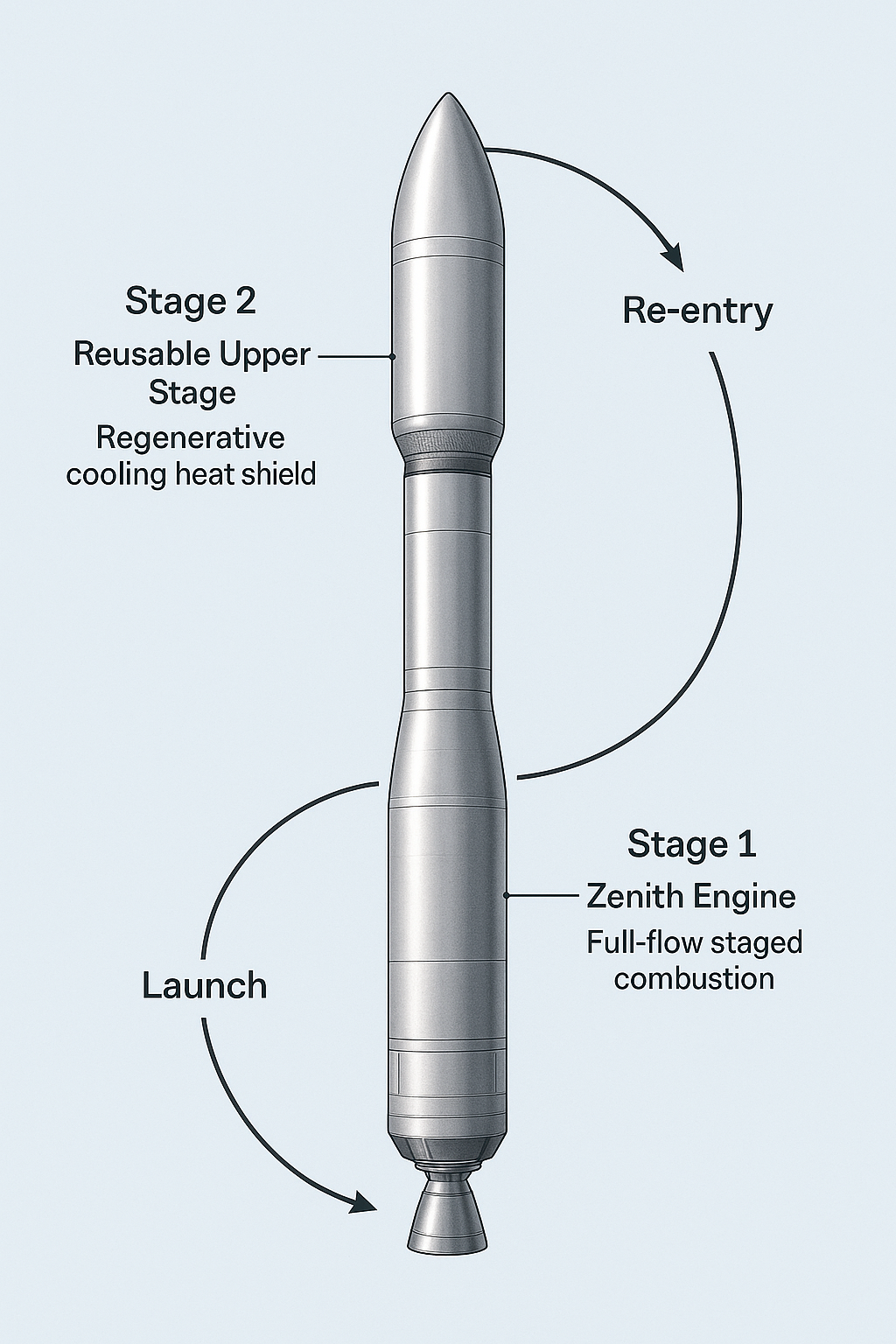
At the heart of Stoke’s vision lies Nova, a medium-lift rocket designed for rapid reuse of both the first and second stages — a technological feat no company has yet achieved at scale.
Key technical highlights include:
- First-stage “Zenith” engine: a full-flow staged combustion engine, among the most efficient and complex designs in modern rocketry.
- Re-entry-capable upper stage: featuring a regeneratively cooled heat shield, allowing it to survive atmospheric re-entry without disposable thermal protection systems.
- Rapid turnaround goals: Stoke aims for 24-hour reuse cycles, echoing the efficiency ambitions of commercial aviation.
If successful, Nova could become the first fully reusable orbital-class rocket, slashing launch costs and reducing orbital debris — two of the industry’s most persistent challenges.
Strategic Momentum: Contracts and Validation
Earlier this year, Stoke Space was selected by the U.S. Space Force for its National Security Space Launch (NSSL) program — joining a small, elite roster of companies eligible for federal launch contracts. This endorsement not only validates Stoke’s technical credibility but also positions it as a potential strategic supplier for defense, communications, and government payloads.
In addition to government partnerships, Stoke has cultivated strong relationships with commercial satellite operators, signaling that the demand for medium-lift, high-frequency launches is only growing. With SpaceX’s Starship focused on heavy payloads and Rocket Lab covering small payloads, Stoke’s Nova neatly fills a critical mid-market gap.
A Vision Beyond the Launchpad
Stoke Space’s mission goes beyond rockets. The company envisions a future where reusable launch systems enable sustainable space infrastructure, on-orbit manufacturing, and frequent access to low Earth orbit (LEO) — the essential stepping-stones to lunar and Martian economies.
By drastically reducing turnaround time and material waste, Nova could pioneer a closed-loop model of orbital logistics, where spacecraft are reused, refurbished, and relaunched within days — much like the airliners that connect continents today.
As Lapsa framed it:
“Our goal isn’t just to reach orbit. It’s to stay there — responsibly, economically, and often.”
Why This Matters
This $510 million infusion underscores a pivotal shift in the private space sector: investors are betting not just on reaching orbit, but on making orbit accessible and sustainable.
Stoke’s timing is ideal. With the satellite economy booming, constellations expanding, and space infrastructure projects multiplying, the need for affordable, reusable launch services has never been greater. If Stoke delivers on its vision, it could stand shoulder-to-shoulder with SpaceX in reshaping how humanity reaches — and stays in — space.
The Road Ahead
With nearly $1 billion raised, a national security launch contract, and a Cape Canaveral launch site under refurbishment, Stoke Space is poised for an inflection point. The company plans to begin integrated stage testing through late 2025, leading to first orbital flight demonstrations in 2026.
While challenges remain — from complex engine cycles to re-entry validation — the momentum is undeniable. The coming two years will determine whether Stoke can translate its bold engineering into repeatable, reliable performance.
Final Thoughts
Stoke Space’s rise signals something larger than another rocket startup making headlines — it’s a marker of how quickly the commercial space industry is maturing. The new space race is no longer just about scale; it’s about efficiency, reusability, and sustainability.
For investors, policymakers, and enthusiasts alike, the message is clear:
The future of orbit is reusable. And Stoke Space just took a giant step toward making it real.